

Defend the Faith · The Toughest Questions · Lesson 1
Did Jesus rise from the dead?
The Christian faith stands or falls here, and Paul says so himself. Learn the answer at three depths: hallway, coffee, and the long evening.
Every faith has a centre, and Christianity's is an event. Paul, who had everything to lose by believing it, states the terms without flinching: if Christ has not been raised, the preaching is worthless and so is the faith. No other religion hands its critics a test that clean. This lesson takes the test seriously, and gives you the answer at three depths, because conversations come in three sizes: the hallway, the coffee, and the long evening.
In 30 seconds
Jesus of Nazareth was crucified under Pontius Pilate and buried in a known tomb. On the third day the tomb was empty, and Jesus appeared alive: to Mary Magdalene, to Peter, to the Twelve, and later to more than five hundred people at once. Paul stakes the whole faith on it: if Christ has not been raised, our preaching is worthless and so is our faith. But Christ has been raised, and that is a claim about history, not a feeling.
For what I received I passed on to you as of first importance: that Christ died for our sins according to the Scriptures,
1 Corinthians 15:3 (BSB)
In plain words
Paul is handing on what was handed to him. This is not his private idea; it is the heart of the faith, and its first item is that Christ died for our sins, exactly as the Scriptures said he would.
Context · Received, and passed on
Paul uses the language of receiving and delivering something fixed, the same words he uses for the Lord's Supper in 1 Corinthians 11:23. Verses 3 to 8 read as a short summary the church already confessed: Christ died, he was buried, he was raised, he appeared. Paul is quoting the faith, not inventing it.
that He was buried, that He was raised on the third day according to the Scriptures,
1 Corinthians 15:4 (BSB)
In plain words
Because he truly died, he was buried. And he truly rose, on the third day, as the Scriptures said he would.
See also · On the third day
Paul does not name the passages here. Jesus himself spoke of the three days by the sign of Jonah (Matthew 12:40), and Hosea 6:2 speaks of being raised up on the third day.
And if Christ has not been raised, our preaching is worthless, and so is your faith.
1 Corinthians 15:14 (BSB)
In plain words
Paul will not protect the faith from the facts. If Jesus stayed dead, preaching him is a waste of words and trusting him is a waste of trust.
Context · Paul argues the worst case
Some in Corinth were saying there is no resurrection of the dead (verse 12). So in verses 13 to 19 Paul supposes they are right, and follows where it leads: preaching empty, faith empty, the apostles false witnesses, sins unforgiven. Verse 20 is where he turns the argument around.
In 3 minutes
Start with the facts Paul lists, in the order he lists them. Christ died for our sins according to the Scriptures. He was buried. He was raised on the third day according to the Scriptures. And he appeared: to Cephas, then to the Twelve, then to more than five hundred brothers at once, then to James, then to all the apostles, and last of all to Paul himself (1 Corinthians 15:3 to 8). Paul writes this about twenty-five years after the crucifixion, and he describes it as something he received, a summary older than his letter, reaching back to the first years of the church.
Then the tomb. On the Sunday morning the women who had watched Jesus die came to finish the burial customs and found the stone moved and the body gone. The angel's words in Matthew's Gospel are the church's first sermon: "He is not here; He has risen, just as He said! Come, see the place where He lay." Notice who carries this news. In that culture a woman's testimony was given little weight, and no one inventing a religion would choose women as its first witnesses. The Gospels name them because they were there.
The appearances were not one confused glimpse. Jesus presented himself alive over forty days, with what Luke calls many convincing proofs (Acts 1:3). He ate with the disciples. He let Thomas touch the wounds. He convinced James, his own brother, who had not believed in him during his ministry, and Paul, who was arresting his followers. Within weeks Peter was preaching the resurrection in Jerusalem itself, the one city where a produced body would have ended everything: "God has raised this Jesus to life, to which we are all witnesses" (Acts 2:32).
Why does it matter this much? Because Paul refuses to let the resurrection be a decoration. If Christ has not been raised, he says, your faith is futile and you are still in your sins (1 Corinthians 15:17). If he has been raised, he is the firstfruits of those who have fallen asleep (1 Corinthians 15:20): the first sheaf of a harvest, and everyone in Christ is in the same field. The resurrection is God's verdict that the cross worked, and his promise that death is not the last word over anyone who belongs to Jesus.
But the angel said to the women, “Do not be afraid, for I know that you are looking for Jesus, who was crucified.
Matthew 28:5 (BSB)
In plain words
The angel speaks to the women who came to the tomb. They were looking for Jesus, who had been crucified, and the first word spoken to them is: do not be afraid.
Context · At dawn, after the Sabbath
The women came as the first day of the week was dawning, to see the tomb (Matthew 28:1). They came expecting a sealed grave and a dead man; everything the angel says is spoken to people braced for grief.
He is not here; He has risen, just as He said! Come, see the place where He lay.
Matthew 28:6 (BSB)
In plain words
The tomb is empty. The angel invites the women to check for themselves, and reminds them that Jesus had said this would happen.
See also · Just as He said
Jesus had told his disciples beforehand that he would be killed and raised on the third day (Matthew 16:21; Matthew 17:23). The angel's words point back to a promise made before the cross, not an explanation invented after it.
After His suffering, He presented Himself to them with many convincing proofs that He was alive. He appeared to them over a span of forty days and spoke about the kingdom of God.
Acts 1:3 (BSB)
In plain words
For forty days after his suffering, Jesus kept appearing to his followers, giving them many convincing proofs that he was alive, and teaching them about the kingdom of God.
Context · Luke's second book
Acts opens by tying itself to Luke's Gospel, 'my first book' (Acts 1:1). The forty days run from the resurrection to the day Jesus was taken up (Acts 1:9).
God has raised this Jesus to life, to which we are all witnesses.
Acts 2:32 (BSB)
In plain words
Peter says it in public: God has raised this Jesus to life, and 'we are all witnesses', the apostles themselves, standing there.
Context · Preached in Jerusalem itself
This is Peter's sermon at Pentecost (Acts 2:14), spoken in the same city where Jesus had been crucified weeks earlier (Acts 2:23). A claim about a tomb could be checked there; Peter makes it in front of the crowds anyway.
And if Christ has not been raised, your faith is futile; you are still in your sins.
1 Corinthians 15:17 (BSB)
In plain words
Futile means empty, producing nothing. If Christ was not raised, nobody has been forgiven; we would still be in our sins.
Context · The losses stack up
Paul keeps the supposition running one more step: if Christ is not raised, then those who have died trusting him have perished (verse 18), and Christians are to be pitied more than all men (verse 19).
But Christ has indeed been raised from the dead, the firstfruits of those who have fallen asleep.
1 Corinthians 15:20 (BSB)
In plain words
But. Paul's whole argument turns on that word. Christ has been raised, and 'firstfruits' means he is the first of a harvest, not a one-off: what happened to him will happen to those who belong to him.
The original word · Firstfruits: aparchē
The Greek word is aparchē, the first portion of the harvest, offered to God before the rest was gathered. Thayer's lexicon notes that, said of Christ here, it carries a pledge: the firstfruits come first and guarantee that the rest of the harvest follows.
Context · The first sheaf
In Israel's worship, the first sheaf of the harvest was brought to God as an offering before the crop was gathered in (Leviticus 23:10). Paul's readers knew the picture: one sheaf first, the whole field after it.
Go deeper
The earliest testimony is very early
Paul writes 1 Corinthians around the middle of the first century, roughly twenty-five years after the crucifixion. In chapter 15 he does not argue his way toward the resurrection as a new idea. He quotes what he received, using the language of handing on a tradition, and he says the appearing list ends with himself. A received summary quoted by Paul in the 50s was being confessed years earlier still, within the first decade after the cross, in the city where the events happened.
That matters because legends need time and distance. The resurrection proclamation had neither. It was made in Jerusalem, in the lifetime of the witnesses, most of whom Paul says were still alive and available to be asked (1 Corinthians 15:6). Hostile hearers had every motive and every opportunity to end the story by producing a body or discrediting a witness. The story survived in the one city where it could most easily have been killed.
The empty tomb and the first witnesses
All four Gospels report the tomb found empty, and all four put women there first. Matthew records the angel's words to Mary Magdalene and the other Mary: "He is not here; He has risen, just as He said!" The detail about the women is the kind of thing a fabricator in that culture would leave out, since a woman's testimony was discounted. The church kept it in every Gospel because it is what happened.
The alternative explanations have been tried for two thousand years and each one breaks on the same facts. A stolen body does not explain why the thieves then preached the resurrection at the cost of their lives, nor why Paul, who was persecuting the church, and James, who had not believed during Jesus' ministry, both changed. A wrong tomb does not explain the appearances. A swooning Jesus, half-dead and creeping from a sealed tomb, does not explain why hardened sceptics worshipped him as Lord. Thomas speaks for them: "My Lord and my God!"
Appearances over forty days, to friends and enemies
Luke records that Jesus presented himself alive after his suffering "with many convincing proofs", appearing over forty days (Acts 1:3). The appearances were not a single glimpse in a dark garden. They were repeated, to individuals and groups, to the convinced and the doubting, in Jerusalem and Galilee, ending with the Ascension. Peter, who had denied Jesus three times, stood up in Jerusalem weeks after the crucifixion and said to the crowd that had demanded the cross: "God has raised this Jesus to life, to which we are all witnesses" (Acts 2:32). Cowardice had turned to that kind of boldness. Something had happened to Peter, and he told the city what it was.
Why this settles so much
Paul draws the line with unusual bluntness. If Christ has not been raised, faith is futile and Christians are still in their sins (1 Corinthians 15:17). If he has been raised, he is the firstfruits, the first sheaf of a harvest that includes everyone who belongs to him (1 Corinthians 15:20). Peter calls the result a living hope, a new birth through the resurrection (1 Peter 1:3). And salvation itself is confessed in resurrection terms: confess that Jesus is Lord, and believe in your heart that God raised him from the dead (Romans 10:9).
To answer this question well, hold two things together: the evidence, stated plainly, and the manner Peter commands, gentleness and respect (1 Peter 3:15). The resurrection does not need our volume. It needs witnesses who know what happened, why it matters, and how to say both to a friend.
Thomas replied, “My Lord and my God!”
John 20:28 (BSB)
In plain words
Thomas, who had refused to believe without seeing, stands before the risen Jesus and says the fullest words anyone speaks to him in the Gospels: 'My Lord and my God!'
Context · The doubter's demand, met
A week earlier Thomas had said he would not believe unless he saw the nail marks and put his hand into Jesus' side (John 20:25). Jesus offers exactly that (verse 27). Thomas's answer is not inspection but worship.
Blessed be the God and Father of our Lord Jesus Christ! By His great mercy He has given us new birth into a living hope through the resurrection of Jesus Christ from the dead,
1 Peter 1:3 (BSB)
In plain words
Peter blesses God for the new birth. Because Jesus rose from the dead, the hope given to believers is not a wish; it is living, like the one it rests on.
Context · Written to sufferers
Peter writes to believers scattered across Asia Minor who were already suffering grief and trials for their faith (1 Peter 1:1, 6). The living hope is not spoken to comfortable people; it is spoken to people who needed a hope that could hold weight.
that if you confess with your mouth, “Jesus is Lord,” and believe in your heart that God raised Him from the dead, you will be saved.
Romans 10:9 (BSB)
In plain words
Paul puts it plainly: confess with your mouth that Jesus is Lord, and believe in your heart that God raised him from the dead, and you will be saved.
See also · Jesus is Lord
'Jesus is Lord' is the church's earliest confession of faith. Paul uses it again in 1 Corinthians 12:3, and Philippians 2:11 looks to the day every tongue confesses it.
But in your hearts sanctify Christ as Lord. Always be prepared to give a defense to everyone who asks you the reason for the hope that is in you. But respond with gentleness and respect,
1 Peter 3:15 (BSB)
In plain words
Set Christ apart in your heart as Lord. Then be ready: when someone asks the reason for your hope, have the answer prepared, and give it with gentleness and respect.
The original word · A defense: apologia
The word translated 'defense' is apologia, a formal answer or defence, the word used when a person answers charges before officials, as Paul does in Acts 22:1 and 25:16. Peter is not asking for an argument; he is asking for a reasoned answer, ready in advance.
Context · Gentle, while being slandered
Peter writes to Christians who were being insulted and slandered for Christ's sake (1 Peter 3:16). The command to answer gently is given to people with every reason to answer sharply, which is the point.
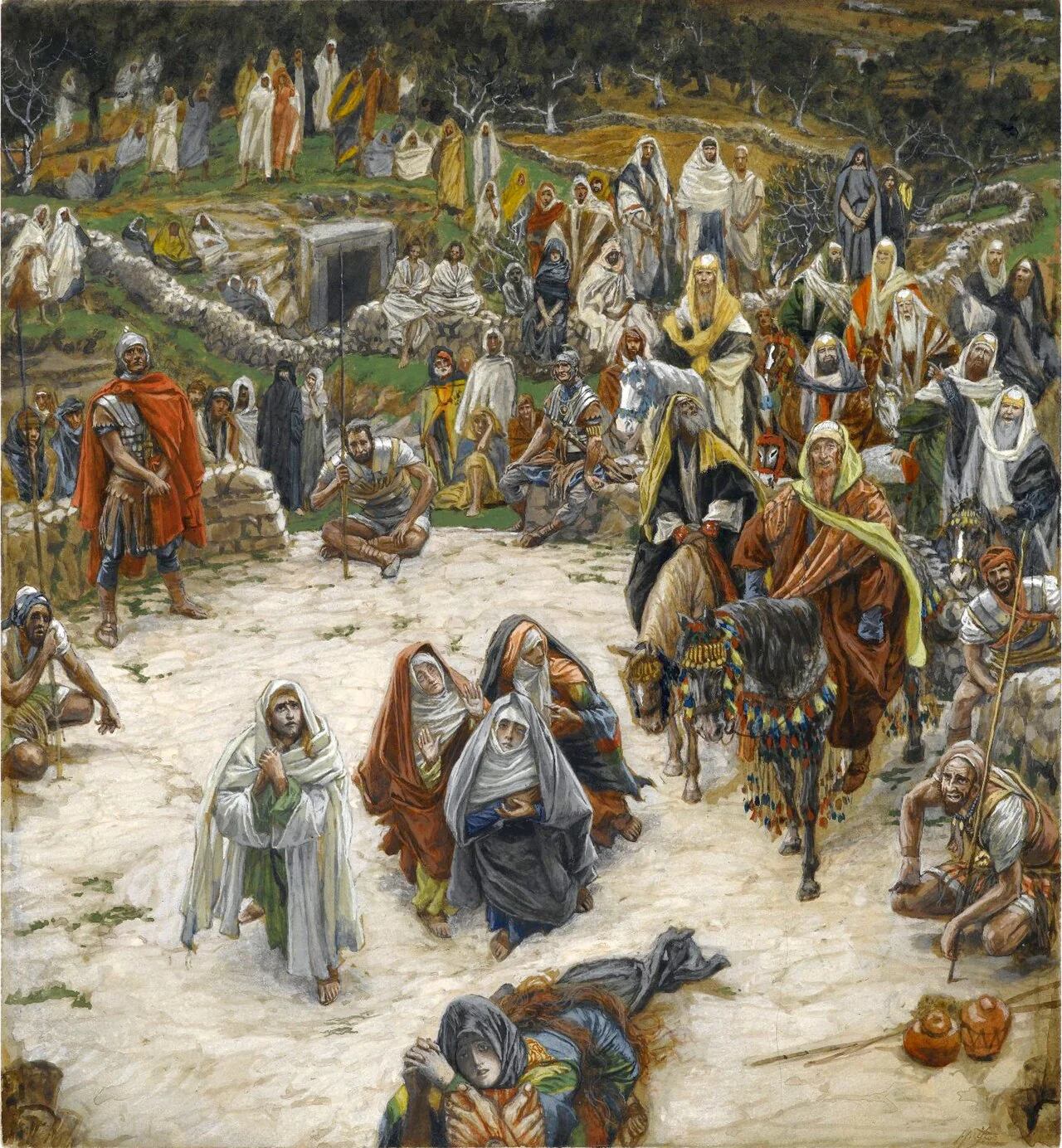
The manner matters as much as the matter
Peter wrote his letter to Christians facing the same conversations, and his instruction joins the answer to its tone. Have the defence ready, he says, and give it with gentleness and respect. A resurrection answer delivered with contempt contradicts itself while it is being spoken. Know the facts cold, and deliver them warm.
But in your hearts sanctify Christ as Lord. Always be prepared to give a defense to everyone who asks you the reason for the hope that is in you. But respond with gentleness and respect,
1 Peter 3:15 (BSB)
In plain words
Set Christ apart in your heart as Lord. Then be ready: when someone asks the reason for your hope, have the answer prepared, and give it with gentleness and respect.
The original word · A defense: apologia
The word translated 'defense' is apologia, a formal answer or defence, the word used when a person answers charges before officials, as Paul does in Acts 22:1 and 25:16. Peter is not asking for an argument; he is asking for a reasoned answer, ready in advance.
Context · Gentle, while being slandered
Peter writes to Christians who were being insulted and slandered for Christ's sake (1 Peter 3:16). The command to answer gently is given to people with every reason to answer sharply, which is the point.
Words to know
- Firstfruits. The first sheaf of a harvest, brought to God as the promise of the rest. Christ raised first; his people follow (1 Corinthians 15:20).
- Apologetics. A defence of the faith, from the Greek apologia, a reasoned reply. Peter commands it to be ready, and gentle (1 Peter 3:15).
Practise this lesson
Downloads
- Kahoot quiz (.xlsx)Generated in your browser from this page: 6 questions, template format.Open lesson
- Printable quiz (PDF)Questions on one side, answer key with reasons overleaf.Open
Review status: in-theological-review. Every Contend lesson passes a human theological review against the Statement of Faith before it is published as approved teaching. This lesson is in that queue.